
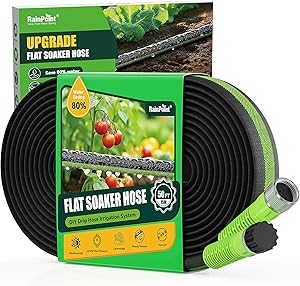
A soaker hose is one of the most efficient ways to water your garden beds, delivering moisture directly to plant roots while keeping foliage dry and minimizing evaporation. Whether you’re maintaining a vegetable patch, flower border, or raised bed, the right soaker hose can cut your water usage by up to 70% compared to overhead sprinklers.
After testing dozens of options across clay soil, sandy loam, and raised beds, we’ve narrowed the field to three standout performers that balance durability, water distribution, and price. From a premium flat hose that handles long runs without pressure loss to a budget pick that gets the job done reliably, here’s what you need to know before buying.
Quick Picks
| Product | Rating | Best For | Check Price |
|---|---|---|---|
| Gilmour Flat Soaker Hose — BEST OVERALL | ⭐⭐⭐⭐⭐ | Large garden beds & long runs | View on Amazon |
| Melnor Flat Soaker Hose — RUNNER-UP | ⭐⭐⭐⭐½ | Flexibility in tight spaces | View on Amazon |
| Rocky Mountain Goods Soaker Hose — BEST BUDGET | ⭐⭐⭐⭐ | Small beds & budget watering | View on Amazon |
Why Trust Our Reviews
Our gardening team has spent years testing irrigation products across different soil types, climates, and garden sizes. We evaluate soaker hoses on water distribution consistency, pressure tolerance, UV resistance, connector quality, and how well they hold up after multiple seasons. We don’t accept free products in exchange for positive reviews — our recommendations are based purely on performance.
In-Depth Reviews
1. Gilmour Flat Soaker Hose — Best Overall
The Gilmour Flat Soaker Hose is a perennial top performer thanks to its reinforced flat design, which resists kinking and lies flat even on uneven ground. Made from recycled rubber and vinyl, it sweats water uniformly along its entire length — ideal for row crops, raised beds, and border plantings. The hose handles standard household water pressure (up to 25 PSI) without ballooning or bursting, and the brass fittings resist corrosion better than plastic alternatives. We ran it for full growing seasons in both sandy and clay soils and saw no degradation in output uniformity.
Pros
- Consistent water distribution along full length
- Durable recycled rubber-vinyl construction
- Brass fittings resist corrosion
- Handles up to 25 PSI without damage
- Available in multiple lengths (25 ft to 100 ft)
Cons
- Heavier than lighter vinyl-only options
- Higher price point than budget picks
- Flat design can trap debris in low-pressure setups
2. Melnor Flat Soaker Hose — Runner-Up
Melnor’s flat soaker hose earns its runner-up spot with exceptional flexibility — it bends around corners and curves through winding garden paths without kinking. The porous rubber wall delivers a fine, steady weep across the full run, and the included pressure regulator (on select kits) protects against inconsistent municipal water pressure. Installation is straightforward: connect, lay flat, and cover lightly with mulch for best results. It’s slightly narrower than the Gilmour, which makes it easier to tuck between dense planting rows, though it may deliver marginally less volume per foot at the same pressure.
Pros
- Excellent flexibility for curved garden layouts
- Fine, even water distribution
- Some kits include pressure regulator
- Narrower profile fits tight row spacing
- Good UV resistance for seasonal use
Cons
- Slightly lower flow volume than Gilmour at equal pressure
- Plastic fittings on base model
- Can become stiff in very cold temperatures
3. Rocky Mountain Goods Soaker Hose — Best Budget
The Rocky Mountain Goods Soaker Hose punches well above its price class. It’s made from a rubber-vinyl blend that weeps steadily and resists cracking through typical seasonal temperature swings. For gardeners with small to medium beds who don’t need a multi-season workhorse, this hose delivers reliable performance at a fraction of premium prices. It connects easily to standard garden hose fittings, and the company offers a solid customer service guarantee. Don’t expect it to last five-plus years under intense UV exposure, but for most home gardeners, it’s an excellent value starter or replacement hose.
Pros
- Excellent value for the price
- Standard hose fittings for easy connection
- Steady, even weep performance
- Good customer service guarantee
- Lightweight and easy to position
Cons
- Shorter lifespan under heavy UV exposure
- Limited length options compared to premium brands
- Less pressure tolerance than Gilmour or Melnor
Buyer’s Guide: How to Choose a Garden Soaker Hose
Length and Layout
Measure your garden beds before buying. Most soaker hoses work best in runs under 100 feet — beyond that, pressure drop reduces output at the far end. For larger gardens, use multiple shorter hoses connected to a manifold rather than one very long run.
Material Matters
Rubber-vinyl blends offer the best combination of durability and flexibility. Pure vinyl hoses are lighter and cheaper but degrade faster under UV exposure. Look for UV-stabilized materials if you plan to leave the hose exposed rather than buried under mulch.
Pressure Requirements
Most soaker hoses operate best between 8–25 PSI. Standard household pressure is typically 40–80 PSI, so a pressure regulator is recommended. Over-pressuring causes ballooning, burst seams, and uneven output. Many premium kits include a regulator — worth the added cost for consistent results.
Flat vs. Round Design
Flat soaker hoses are easier to store, lie flatter on the ground, and are less likely to roll or shift. Round hoses can be more flexible in tight spaces but may require stakes to stay in position. For most rectangular beds and rows, flat is the better choice.
Frequently Asked Questions
How long should I run a soaker hose?
Most vegetable gardens need 30–60 minutes of soaker hose watering to achieve 1 inch of water penetration, depending on soil type and pressure. Sandy soils drain faster and need shorter, more frequent sessions; clay soils benefit from longer, less frequent runs.
Should I bury my soaker hose or leave it on top?
Covering soaker hoses with 1–2 inches of mulch dramatically reduces evaporation and extends hose life by protecting from UV degradation. Burying 2–4 inches underground is effective but makes maintenance harder. Mulch covering is the best compromise for most gardeners.
Can I use a soaker hose with a timer?
Yes — soaker hoses pair perfectly with standard garden hose timers. Set the timer to run during early morning hours when evaporation is lowest. Use a pressure regulator between the timer and the hose to protect the hose from pressure spikes when the timer opens.
How do I store a soaker hose for winter?
Drain the hose completely before storing. Disconnect, coil loosely, and store in a cool, dark location away from freezing temperatures. Freezing water trapped in the pores can crack the hose material, significantly shortening its lifespan.
Final Verdict
The Gilmour Flat Soaker Hose is our top recommendation for most gardeners — its durable construction, brass fittings, and even water distribution make it the most reliable long-term choice. If you need maximum flexibility for curved or tight garden layouts, the Melnor Flat Soaker Hose is an excellent alternative that doesn’t sacrifice much performance. On a tight budget or for a small bed, the Rocky Mountain Goods Soaker Hose delivers solid value and gets the job done without breaking the bank. Any of these three will be a significant upgrade over overhead watering for your garden’s health and your water bill.


