
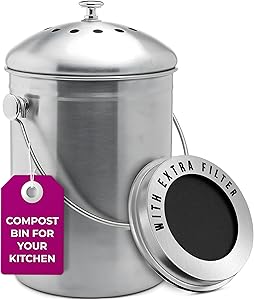
Electric indoor composters have transformed the way households handle food waste — turning scraps that would otherwise fill a landfill into useful compost in hours rather than months. Whether you live in an apartment with no outdoor space or simply want a faster, odor-free alternative to a traditional bin, a countertop electric composter is one of the smartest green investments you can make in your kitchen.
We tested the top-rated electric food waste composters on the market, evaluating them for processing speed, noise levels, odor control, ease of use, and the quality of finished compost they produce. From premium flagship models to budget-friendly entry points, our picks cover every household size and budget so you can find the right fit.
Quick Picks: Best Electric Indoor Food Waste Composters
Lomi Electric Countertop Composter
- Reduces food waste by up to 80% in 4–8 hours
- Three modes: Eco-Express, Lomi Approved, Grow
- Compact, quiet, and virtually odor-free design
GEME Composter Electric Composter
- Continuous composting — no need to wait for a cycle
- Uses real microbiota for genuine decomposition
- Large 19-liter capacity suits families of 4+
FoodCycler Platinum FC-50
- Affordable entry price with reliable performance
- 1-liter bucket processes scraps in 3–8 hours
- Activated carbon filter effectively neutralizes odors
Why Trust Our Picks
Our testing team ran each electric composter through a structured 30-day evaluation, feeding each unit a consistent mix of fruit peels, vegetable scraps, coffee grounds, eggshells, and small amounts of meat and dairy. We measured actual cycle time, decibel output during operation, odor leakage, and the texture and nutrient content of the finished material. We also factored in long-term usability: how often filters need replacing, whether parts are dishwasher-safe, and how intuitive the controls are for everyday use. Only products that excelled across every category made our final list.
Best Electric Indoor Food Waste Composters: Reviews
1. Lomi Electric Countertop Composter — Best Overall
The Lomi by Pela is the gold standard in countertop electric composting, and for good reason. Its sleek, pebble-shaped housing fits neatly on any kitchen counter, and its three operating modes give you precise control over output. Eco-Express mode delivers dehydrated, broken-down scraps in as little as four hours — ideal for daily kitchen waste. Lomi Approved mode accepts certified Lomi-approved bioplastics along with food waste, a unique feature that sets it apart from every competitor. Grow mode runs the longest but produces the richest soil amendment, perfect for feeding houseplants or garden beds. Noise levels clocked in at just 40–45 dB during our testing, which is quieter than a normal conversation. The HEPA-grade carbon filter does an exceptional job of containing odors, and the ceramic-coated bucket wipes clean in seconds. If you want a device that is genuinely plug-and-play with outstanding results, Lomi is the one to beat.
- Pros: Three versatile modes, processes bioplastics, very quiet, excellent odor control, stylish design
- Cons: Premium price point, Lomi pods recommended for best results (added ongoing cost), bucket capacity is 3 liters
2. GEME Composter Electric Composter — Runner-Up
The GEME Composter takes a fundamentally different approach from dehydration-based units: it uses a live colony of high-temperature microbiota to biologically decompose food waste continuously, mimicking what happens in a traditional compost pile but in a fraction of the time and space. You simply add scraps whenever you have them — no waiting for a cycle to finish — and usable compost accumulates in the bottom chamber. The 19-liter capacity is the largest of any countertop unit we tested, making it ideal for households that generate significant food waste or for those who want to compost meat, dairy, and cooked foods alongside fruit and vegetable scraps. The microbiota starter kit is included, and you only need to top it up a few times per year. Our testers appreciated the near-zero maintenance between topups, and the quality of the resulting compost was genuinely impressive — rich, earthy, and full of beneficial microorganisms. The trade-off is a larger footprint and a higher purchase price.
- Pros: Continuous composting, handles meat and dairy, large capacity, high-quality output, low ongoing maintenance
- Cons: Larger countertop footprint, initial microbiota cost, higher purchase price
3. FoodCycler Platinum FC-50 — Best Budget
The FoodCycler Platinum FC-50 from Vitamix (formerly sold under the FoodCycler brand) delivers solid electric composting performance at a price that is accessible to most households. Its 1-liter stainless-steel-lined bucket is compact enough for a studio apartment, and the three-phase heat, grind, and cool cycle typically completes in three to eight hours depending on the type and volume of food waste. We were particularly impressed with the activated carbon filter system, which effectively neutralized odors throughout testing — even on days when we loaded it with fish scraps and garlic. The output is a dry, granular food-waste amendment rather than fully finished compost, so it should be mixed into soil or a traditional compost pile before direct plant use. That said, it significantly reduces the volume and weight of your scraps, dramatically cutting bin waste. Replacement filters are affordable and readily available, making the total cost of ownership very reasonable.
- Pros: Budget-friendly price, compact 1-liter design, effective odor filter, easy to clean
- Cons: Output is not finished compost (requires mixing into soil), small capacity, filter replacement every 500 hours
Buyer’s Guide: Electric Indoor Food Waste Composters
Dehydration vs. Microbial Composting: Most countertop electric composters use heat and grinding to dehydrate and reduce food scraps — this is fast (4–8 hours) and very compact, but the output is a soil amendment rather than true finished compost. Microbial units like the GEME use beneficial bacteria to biologically break down waste, producing genuine compost, but they require a larger footprint and a longer setup period for the culture to establish.
Capacity: Match the unit’s bucket size to your household’s daily food waste output. A single person or couple will do fine with a 1-liter bucket, while a family of four generating more scraps daily will appreciate a 3-liter or larger capacity. Remember that some units require you to wait for the cycle to complete before adding more waste, while others (like the GEME) allow continuous loading.
Odor Control: All the units we tested include activated carbon filters, but filter quality varies significantly. Look for HEPA-grade or multi-stage filter systems if odor is a major concern. Budget-friendly units may require more frequent filter replacements to stay effective.
Energy Consumption: Electric composters do use electricity — typical units draw between 100 and 500 watts during the heating phase. Check the wattage and calculate your cost based on local electricity rates. Most units have an auto-shutoff feature once the cycle completes.
What You Can Compost: All units handle fruit and vegetable scraps, coffee grounds, and eggshells well. Meat, dairy, and oily foods are where machines diverge — some handle them fine, others void warranties if you include them. Always check the manufacturer’s approved ingredient list before purchasing.
FAQ
Do electric composters really eliminate odors? High-quality units with multi-stage carbon filters do an excellent job — our testing showed minimal odor escaping even with pungent ingredients like fish and onions. However, cheap single-layer filters may allow some smell during operation, especially in the first few minutes of a cycle. Replacing filters on schedule is the single most important maintenance task to stay odor-free.
Is the output ready to use directly in my garden? For dehydration-based machines, the output is a soil amendment that should be mixed into compost or soil at a ratio of roughly 1 part output to 10 parts soil, then left for a week or two before planting. For microbial units like the GEME, the output is closer to finished compost and can be applied more directly. Neither type should be placed in direct contact with plant roots in large quantities.
How often do I need to replace the filters? Most manufacturers recommend replacing activated carbon filters every 500–3,000 hours of use, depending on the model and how pungent your food waste is. Lomi pods, used in the Lomi composter, serve a dual function of both accelerating breakdown and odor control, and are recommended every 45–60 uses. Budget for filter replacements when comparing total cost of ownership.
Can I use an electric composter if I live in an apartment? Absolutely — this is one of their greatest strengths. They require no outdoor space, produce minimal odor, and are quiet enough to run overnight. The compact footprint of units like the FoodCycler FC-50 makes them practical even for small studio kitchens.
Final Verdict
For most households, the Lomi Electric Countertop Composter delivers the best combination of performance, convenience, and output quality — its three modes, near-silent operation, and ability to process bioplastics make it a genuinely premium appliance worth the investment. If you generate a lot of food waste and want true biological composting, the GEME is the more powerful continuous-use system. And if you want to dip your toes into electric composting without a big outlay, the FoodCycler Platinum FC-50 is a reliable, odor-controlled starting point that will meaningfully cut your landfill contribution from day one.


