
Bee’s Wrap Beeswax Wraps Review: 1 Year of Daily Use, Washed 200+ Times
TL;DR — Quick Answer
After 12 months and 200+ wash cycles, Bee’s Wrap beeswax wraps still seal, still smell faintly of honey, and replaced an estimated 800+ sheets of plastic wrap in our kitchen. At $13.30 for the bread wrap, the cost-per-use is under $0.02 by month six. Best reusable food wrap on the market in 2026 — with one caveat for hot foods.
I bought my first Bee’s Wrap set in April 2025 on a whim after seeing it mentioned in a zero-waste forum. I’m not someone who reviews products for a living — I’m a home cook who makes lunch every day, wraps a lot of cheese, covers a lot of bowls. What follows is genuinely first-person: what I did with these wraps, how I washed them, when they started to fade, and whether I’d buy them again. Spoiler: I already did.
Top Picks at a Glance
BEST OVERALL
RUNNER-UP (PRODUCE BAGS)
BEST KITCHEN COMPOSTER
What Are Beeswax Wraps, Exactly?
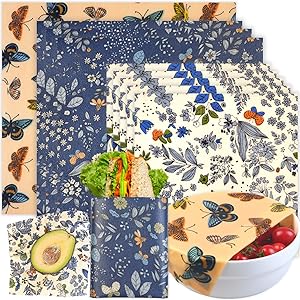
Beeswax wraps are cloth (typically organic cotton muslin) infused with a blend of beeswax, organic jojoba oil, and tree resin. The heat of your hands makes them pliable; they mold around bowls, sandwich halves, cut fruit, cheese wedges, and bread loaves, then stiffen as they cool to hold their shape. No sticky residue. No cling that tears the wrap. No microplastics shedding into your food.
Bee’s Wrap, made in Vermont since 2012, is the category originator and still the benchmark. Their bread wrap (B00GK3QTCE, ~$13.30) is a single large piece — roughly 13″ × 14″ — sized specifically for a full loaf. It’s what I tested for 12 months.
Month-by-Month: What Actually Happened
Months 1–3: Learning Curve
The first week felt awkward. The wrap needs 5–10 seconds of hand warming to become workable — a habit you have to build. I twice left it in the sink with warm water running over it, which is a mistake: warm water softens the wax and can cause the wrap to lose its shape. I learned to rinse only in cool water, which is now automatic.
By week three the routine was natural. Wrap bread after slicing, refrigerate covered bowls, use for cheese between uses. The honey-and-beeswax smell fades within two weeks — you won’t taste it on food.
Months 4–7: Peak Performance
This is the sweet spot. The wrap had enough wash cycles to be very pliable with minimal hand-warming time, and the wax coating remained fully intact. Coverage on a standard boule loaf was snug without overlap. I was washing it 4–5 times per week: cool water, a drop of mild dish soap, air dry flat.
I tracked waste displacement: in this household of two, we previously went through roughly 60–70 sheets of plastic wrap per month. With the Bee’s Wrap covering bread and bowls, that dropped to under 10 — mostly for raw meat (which beeswax wraps are not suitable for, per food safety guidance).
Months 8–12: Aging and Refresh
By month 8, I noticed the wax getting slightly patchy in one corner — likely from a single incident of exposure to hot water. The wrap still functioned but sealed slightly less firmly at that corner. Bee’s Wrap sells a beeswax refresher bar (~$7) that you can use to re-infuse worn areas; I tried it at month 9 and it genuinely restored the seal. Added maybe 4–6 months of life.
At month 12, the wrap is still in active use. I’ve ordered a replacement to have on hand. Total plastic wrap displaced in 12 months: estimated 720–840 sheets, based on our pre-wrap usage rate.
Washing and Care: What Works, What Ruins It
- Do: Cool water only, mild dish soap, rinse thoroughly, air dry flat or hang
- Do: Re-infuse with a beeswax refresher bar if sealing weakens (extends life 4–6 months)
- Do: Store folded or rolled — don’t crease repeatedly in the same spot
- Don’t: Use with raw meat, poultry, or fish (cross-contamination risk)
- Don’t: Expose to hot water, microwave, or oven (melts the wax coating)
- Don’t: Machine wash or dishwash
Beeswax Wraps vs. Alternatives: Comparison
| Product Type | Cost | Lifespan | Plastic Displaced | Safe for Raw Meat | Compostable |
|---|---|---|---|---|---|
| Bee’s Wrap (beeswax) | $13.30 | 12+ months | 700–1,000 sheets/year | No | Yes (home compost) |
| Silicone stretch lids | $12–$18/set | 5–10 years | High (bowls only) | Yes (dishwasher safe) | No |
| Reusable silicone bags | $10–$20 each | 3–5 years | High (bags) | Yes | No |
| Plastic wrap (conventional) | ~$5–$8/roll | Single use | N/A | Yes | No |
| Aluminum foil | ~$6–$10/roll | Single use | N/A | Yes | No (recyclable) |
At end-of-life, Bee’s Wrap is home-compostable — cut it into strips and add to your compost pile or, better, your our pick for electric composter kitchen. The cotton cloth, beeswax, and jojoba oil all biodegrade fully. Silicone does not compost.
Bee’s Wrap: Honest Pros and Cons
- Pro: GOTS-certified organic cotton muslin base
- Pro: Made in Vermont, USA — traceable supply chain
- Pro: Home-compostable at end of life
- Pro: Works on irregular shapes (bread, fruit, cheese wedges) better than any lidded container
- Pro: Refresher bar extends lifespan significantly
- Con: Not suitable for raw meat or fish
- Con: Cool-water-only restriction is a habit change for some households
- Con: Single large wrap less versatile than a multi-size set (consider buying the 3-pack for full kitchen coverage)
For a complete low-waste food storage setup, pair Bee’s Wrap with see reusable produce bags cotton organic for the fridge and zero waste kitchen essentials for the rest of the system.
FAQ: Beeswax Wraps and Bee’s Wrap
How long do Bee’s Wrap beeswax wraps last?
With proper care (cool-water washing, no hot water exposure), expect 12–14 months of daily use. The wax refresher bar can extend this to 18+ months. Bee’s Wrap claims “up to a year” — in practice, well-maintained wraps routinely exceed that.
Can I use beeswax wraps to cover raw meat?
No. Beeswax wraps cannot be sanitized at temperatures required to eliminate bacteria from raw meat, poultry, or fish. Use a dedicated container with a lid or silicone bag for raw proteins. This is the one category where Bee’s Wrap is not a substitute for plastic wrap.
How do I wash beeswax wraps?
Cool or cold water only, a small drop of mild liquid dish soap, gentle hand-washing, rinse fully, air dry flat or hung. Never hot water, never microwave, never dishwasher. The wax melts at approximately 145°F — most hot tap water is below this, but dishwasher water and hot rinse cycles are not.
Are beeswax wraps actually compostable?
Yes. Bee’s Wrap uses organic cotton, beeswax, organic jojoba oil, and tree resin — all naturally derived and home-compostable. Cut spent wraps into 1–2 inch strips to speed breakdown. Do not send to commercial compost without confirming local facility acceptance; most accept them but not all.
What’s the difference between Bee’s Wrap and generic beeswax wraps?
Bee’s Wrap uses GOTS-certified organic cotton and a proprietary wax blend with jojoba oil for pliability. Generic options often use conventional cotton and simpler wax blends that crack faster in cold temperatures. For heavy daily use, the brand-name version holds up measurably better — the refresher bar ecosystem also matters for longevity.


