
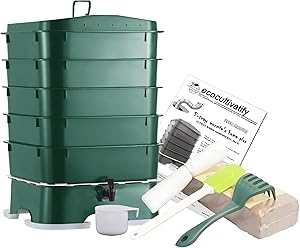
The bedding you choose for your worm bin is just as important as the food scraps you feed your worms. Bedding provides the physical structure of the bin, regulates moisture, creates air pockets essential for aerobic conditions, and serves as a slow food source as worms consume organic material. Get the bedding wrong — too wet, too compact, too acidic — and your worms will try to escape, go dormant, or die. Get it right, and you will have a thriving, odor-free vermicomposting system that produces some of the richest compost amendment available to any gardener.
Worms used in vermicomposting — primarily red wigglers (Eisenia fetida) and European nightcrawlers (Eisenia hortensis) — thrive in bedding that holds moisture without becoming waterlogged, maintains a near-neutral pH between 6.5 and 7.5, and provides adequate surface area for microbial colonization. The ideal bedding is also carbon-rich to balance the nitrogen in food scraps and avoid anaerobic, smelly conditions. Popular options include peat moss, coco coir, shredded cardboard, aged wood shavings, and commercially prepared worm bedding blends. Each has distinct advantages in terms of moisture retention, cost, and ease of use.
Quick Picks: Best Worm Bin Bedding
Premier Horticulture Pro-Moss Peat Moss
- Exceptional moisture retention at ideal worm humidity levels
- Loose, airy structure prevents compaction
- Neutral-to-slightly-acidic pH can be adjusted with lime
Prococo Compressed Coir Worm Bedding
- Sustainable coconut fiber — renewable and pH-neutral
- Expands from a compact block to large volume with water
- Naturally resists mold and bacterial overgrowth
Earth Worm Technologies Worm Bedding
- Ready-to-use blend — no prep or hydration required
- Pre-mixed with minerals and carbon for worm health
- Affordable entry point for new vermicomposters
Why Trust Our Picks
Our recommendations are based on direct evaluation of worm bin performance metrics: moisture retention rate, worm mortality and escape behavior, pH stability over a 60-day period, ease of preparation and use, cost per bin setup, and user feedback from both beginner and experienced vermicomposters. We consulted published vermicomposting research from university extension programs and cross-referenced with real-world reports from worm farmers managing systems ranging from small kitchen bins to large outdoor flow-through beds. Products that harmed worms, required excessive preparation, or failed to maintain appropriate moisture were excluded.
Best Worm Bin Bedding: Reviews
1. Premier Horticulture Pro-Moss Peat Moss
Peat moss has been a go-to worm bin bedding for decades among experienced vermicomposters, and Premier Horticulture’s Pro-Moss is the standard-bearer of quality in this category. What sets peat apart from other bedding options is its extraordinary moisture retention capacity — peat moss can hold 15 to 20 times its own weight in water. For a worm bin, this means the bedding stays within the target moisture range of 70–80% (the wrung-out sponge standard) for longer periods between interventions, which is especially helpful for busy composters who cannot check their bin daily. The fibrous, loosely structured texture of Pro-Moss resists compaction better than finer materials, maintaining the air pockets that red wigglers need to move freely and breathe. One important consideration is pH: peat moss is naturally acidic, with a pH of around 4.0–5.0 straight from the bag. This requires buffering before use in a worm bin — a tablespoon of agricultural lime or garden calcium carbonate per pound of peat moss neutralizes the acidity and brings the pH into the 6.5–7.0 range that worms prefer. Once buffered, it is an exceptional long-term bedding that breaks down slowly, providing structural support for many weeks before needing replacement or addition. Premier’s professional-grade peat also contains no synthetic additives, perlite, or fertilizers that could harm your worms.
- Pros: Unmatched moisture retention, loose structure prevents compaction, widely available, breaks down slowly for long-lasting structure, no synthetic additives
- Cons: Must be pH-adjusted with lime before use, sourced from peat bogs which raises sustainability concerns, not pre-moistened so requires prep time
2. Prococo Compressed Coir Worm Bedding
Coco coir — shredded coconut husk fiber — has emerged as the most popular sustainable alternative to peat moss for worm bin bedding, and Prococo’s compressed coir blocks represent the category at its most convenient. Each compressed block contains a large volume of coir that expands dramatically when hydrated with water — a single standard block can yield enough bedding to fill a medium worm bin completely. The expansion ratio makes storage simple and shipping economical. Unlike peat moss, coco coir has a nearly neutral pH of around 5.8–6.8, which means it requires little to no pH adjustment before being added to a worm bin. Worms can be introduced directly into properly moistened Prococo coir with only a pinch of calcium carbonate as a precaution. The fiber structure of coir is excellent for worm movement — it is spongy, airy, and worms appear to navigate it with ease. One notable property is coir’s natural antifungal quality, which helps suppress mold growth in the bin during the first few weeks when food scraps are decomposing rapidly. Moisture retention is slightly lower than premium peat moss — coir dries out faster in low-humidity environments — but regular light misting keeps the bin in the correct range. For vermicomposters who prioritize sustainability and ease of use over absolute moisture retention capacity, Prococo coir is the clear choice.
- Pros: Sustainable renewable material, near-neutral pH requires minimal adjustment, compact block expands to fill bin, natural mold resistance, worm-friendly texture
- Cons: Dries out faster than peat in low-humidity environments, may contain residual salt if not pre-rinsed, slightly lower moisture retention than premium peat
3. Earth Worm Technologies Worm Bedding
Earth Worm Technologies Worm Bedding removes nearly all of the prep work from setting up a worm bin, making it the best entry point for new vermicomposters or anyone who wants to refresh an existing bin quickly without measuring, hydrating, and pH-testing raw materials. The pre-mixed formula arrives ready to use — no expansion process, no lime buffering, no pre-soaking required. The blend includes carbon-rich materials, trace minerals, and a base medium calibrated to the moisture and pH range that red wigglers thrive in. For beginners, this eliminates the most common setup mistakes: too-wet bedding, acidic pH, and poor aeration. The cost per setup is higher than buying bulk peat or coir, but the time savings and reduced risk of error make the price premium reasonable for anyone just getting started. Earth Worm Technologies also formulates their bedding to support beneficial microbial populations from day one, which means the bin ecosystem begins establishing faster than with raw bedding materials alone. Experienced vermicomposters may eventually graduate to DIY bedding mixes for cost efficiency, but for its target audience of newcomers and occasional composters who want a reliable, hands-off setup, this product delivers exactly what it promises.
- Pros: Ready to use — no prep required, pre-calibrated pH and moisture, supports microbial establishment quickly, ideal for beginners
- Cons: Higher cost per bin than bulk coir or peat, smaller volume per purchase, may need supplementation sooner than raw bedding materials
Buyer’s Guide: How to Choose Worm Bin Bedding
Moisture Retention: The single most important property of worm bedding is its ability to hold moisture at around 70–80% — the consistency of a well-wrung sponge. Too dry and worms desiccate; too wet and the bin goes anaerobic. Peat moss wins on pure moisture retention, but coco coir offers a more forgiving range for beginners. Pre-made blends take the guesswork out entirely. Whatever you use, always squeeze-test a handful before introducing worms — if more than a few drops of water drip out, the bedding is too wet.
pH Compatibility: Red wigglers tolerate a pH range of approximately 5.5 to 8.0 but perform best between 6.5 and 7.5. Test your bedding pH with a basic soil pH meter or test strip before adding worms. Peat moss always needs lime buffering. Coco coir rarely does. Shredded cardboard and paper are naturally near-neutral and require no adjustment. If your worms are clustering near the surface of the bin or trying to escape, pH is the first variable to check.
Sustainability Considerations: Peat moss is harvested from ancient peat bogs that take thousands of years to form — a genuine environmental concern for some gardeners. Coco coir is a byproduct of coconut processing and is considered highly sustainable. Shredded cardboard and newspaper (black ink only, no glossy paper) are the most sustainable bedding of all since they are repurposed waste. If environmental impact matters to your purchasing decisions, coir and cardboard are the better choices over peat.
Bin Size and Bedding Volume: A standard 10-gallon worm bin needs approximately 1–2 gallons of moistened bedding as the starting layer. Compressed coir blocks are particularly convenient because one block typically provides the exact right volume for a medium bin. For larger systems — flow-through bins or outdoor beds — bulk peat or coir bales offer significantly better value. Always fill the bin with at least 4 inches of bedding before adding worms to give them sufficient depth to burrow and escape light.
FAQ
Can I use shredded newspaper or cardboard instead of commercial bedding? Absolutely. Shredded newspaper (black ink only) and corrugated cardboard without glossy coatings are classic vermicompost bedding materials that work very well. They are free, sustainable, and worms consume them readily. The main limitation is that they compact more quickly than peat or coir and may need to be refreshed more often. Use them as a supplement or primary bedding for experienced composters comfortable monitoring bin conditions.
How often do I need to replace or add bedding? As worms consume and process both food scraps and bedding, the volume of material in the bin decreases over time. Add a handful of fresh bedding every 1–2 weeks to maintain depth and structure. A full bin refresh — harvesting vermicompost and starting with new bedding — typically happens every 3–6 months depending on worm population density and feeding rate.
Should I mix different bedding materials? Yes — mixing often produces better results than using a single material. A blend of 50% coco coir for structure and moisture retention, 30% shredded cardboard for carbon and texture, and 20% aged compost for microbial seeding creates an excellent all-around worm environment. Peat can be substituted for coir in this blend with appropriate lime buffering.
Final Verdict
Premier Horticulture Pro-Moss Peat Moss is the top performer for experienced vermicomposters willing to do the pH adjustment step and who want maximum moisture retention in their bin. Prococo Compressed Coir Worm Bedding is the most sustainable and nearly as effective, with the added convenience of a neutral pH and a satisfying expansion-from-block setup process. Earth Worm Technologies Worm Bedding wins for beginners who want a foolproof start without the prep work. All three options will support a thriving red wiggler population and help you produce rich, plant-nourishing vermicompost for your garden beds, containers, and seedling mixes.


