
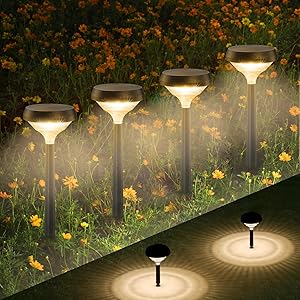
TL;DR: Solar outdoor path lights eliminate cable runs, draw zero grid electricity, and pay back their cost in under one season. A quality 12-pack covers a full garden path with warm ambient light and no operating cost. Best pick: ASIN B07PXRR1TV.
Best Solar Outdoor Path Lights for an Eco Garden in 2026
Outdoor lighting is one of the simplest categories in which to eliminate grid electricity from your home — yet most garden path lights still run on wired low-voltage transformers that draw power constantly, even in daylight. Solar powered outdoor path lights use onboard photovoltaic panels to charge a small battery through the day and discharge it automatically at dusk. No electrician, no trenching, no ongoing electricity cost. For a household already running solar phone chargers and investing in low-energy LED bulbs, solar path lights are the logical extension of that energy-reduction logic to the garden.
This guide covers what separates genuinely good solar path lights from the flood of cheap imports, what lumens and battery capacity numbers actually mean for your specific path length, and how to get maximum performance across seasons — including winter months when daylight hours are short.
Top Pick: GIGALUMI Solar Pathway Lights 12-Pack
Want to compare options? Browse solar path lights on Amazon — filter by pack size, lumen output, color temperature, and IP rating for weather resistance.
Solar Path Light Specs: What the Numbers Mean
| Spec | Budget Tier (avoid) | Mid Range (acceptable) | Quality Tier (recommended) |
|---|---|---|---|
| Lumen Output | 2–5 lm (barely visible) | 10–20 lm (soft ambient) | 25–40 lm (clear path lighting) |
| Battery Capacity | 200–400 mAh NiMH | 600–800 mAh NiMH | 1,200+ mAh NiMH or Li-ion |
| Runtime per Charge | 4–6 hours | 6–8 hours | 8–12 hours |
| Panel Size | Tiny — charges poorly in partial shade | Medium — adequate in full sun | Large — performs in partial shade |
| Weather Rating | None or IP44 | IP44 (splash-proof) | IP65+ (rain, dust-proof) |
| Stake Material | Thin ABS — bends on insertion | Reinforced ABS or steel stake | Stainless or powder-coated steel |
| Color Temperature | Cool white (5000K+) — harsh | Neutral white (4000K) | Warm white (2700–3000K) — garden-appropriate |
Choosing the Right Solar Path Lights for Your Garden
Assess your available sunlight honestly. This is the single most important factor in solar path light performance. The panel specifications assume 6–8 hours of direct sunlight per day for rated battery performance. If your path runs along a north-facing fence, under a tree canopy, or through a shaded courtyard, budget an additional 30–40% battery capacity to compensate. In practice this means choosing lights with 1,200+ mAh batteries if your installation location receives less than 5 hours of direct sun.
Warm white is almost always the right color temperature for gardens. Cool white (5000K+) mimics office fluorescent lighting and looks incongruous in a garden setting. Warm white (2700–3000K) creates the soft, amber-toned ambience that complements plants, stone, and wood. The human eye perceives warm white as more natural outdoors, and it has less impact on nocturnal insects and wildlife — relevant for anyone managing a pollinator-friendly garden.
Spacing for coverage. Path lights work best when staggered every 6–8 feet along a path, alternating sides. This creates overlapping pools of light without dark gaps. A 12-pack covering both sides of a 36-foot path provides this staggered coverage. For longer paths, buy in packs of the same model — mixing brands causes inconsistent light quality that looks unprofessional even in an informal garden setting.
IP rating matters more than it seems. An IP44 rating means the light is protected against water splashing from any direction — fine for typical rain but inadequate for sprinkler zones, coastal humidity, or winter freeze-thaw cycles. IP65 adds protection against low-pressure water jets and dust ingress. For path lights adjacent to lawn irrigation or in climates with significant freeze cycles, IP65 is the practical minimum to avoid replacing lights every season.
Installation, Placement, and Seasonal Performance
Solar path lights install without tools in under 10 minutes per unit — push the stake into soft soil, position the panel face toward the primary sun exposure, and the automatic dusk-on/dawn-off sensor handles the rest. No timer programming, no switch to remember. The only annual maintenance required is wiping the panel surface free of dust, pollen, and debris, which accumulates over summer months and reduces charging efficiency by 15–25% if unaddressed.
Winter performance is where cheap solar lights fail most visibly. Short daylight hours combined with panel efficiency losses in cold temperatures (battery capacity decreases below 32°F) can reduce runtime to 4–5 hours — meaning lights that look great in July go dark before midnight in January. Quality lights address this through larger battery capacity (which still holds enough charge even when charging efficiency drops) and low-power LED drivers that reduce energy draw at the cost of slightly dimmer output in cold conditions.
For truly cold climates (Zone 5 and colder), consider bringing path lights indoors for deep winter months and replacing the batteries every second season — NiMH batteries degrade over 2–3 years of charge cycling and replacement is usually $2–$5 per light using standard AA NiMH cells.
Eco Garden Lighting: Broader Context
A fully solar-powered garden lighting system — path lights, motion sensor floodlights, deck post caps — can eliminate 30–60 kWh per year of outdoor lighting consumption for a typical suburban home. At $0.15/kWh average, the financial saving is modest ($4–$9/year) but the carbon reduction for a coal-heavy grid can be meaningful in aggregate across a neighborhood. The more compelling benefit for most eco households is the elimination of the wired infrastructure itself: no transformer running standby power, no cable failures to dig up and repair, and no electrical permit required for expansion.
Solar path lights pair naturally with other low-intervention garden upgrades covered on this site. Our backyard composting setup guide and cork garden product recommendations are part of the same sustainable outdoor space philosophy: reduce inputs, eliminate waste streams, and choose materials that work with rather than against natural cycles.
Frequently Asked Questions
How long do solar path lights last before needing replacement?
Quality LED solar path lights have a rated LED lifespan of 50,000+ hours — effectively the life of the fixture. The component that actually wears out is the rechargeable battery, which typically lasts 2–4 years of daily charge cycling before holding noticeably less charge. Standard AA or AAA NiMH replacement batteries cost $1–$3 per light and extend fixture life by another 2–4 year cycle. Factor battery replacement cost into your total ownership calculation when comparing price tiers.
Will solar path lights work under tree canopy or in partial shade?
They will work, but with reduced runtime. A light rated for 8–10 hours in full sun may deliver only 4–6 hours in 50% shade conditions. The workaround is to choose lights with larger battery capacity (1,500+ mAh) so they can store enough energy from partial charging. Alternatively, some higher-end solar lights feature a remote panel on a cable — you mount the panel in a sunny spot and the light fixture wherever you need it, decoupling panel and fixture placement.
Do solar path lights attract insects or disrupt nocturnal wildlife?
Warm white LEDs (2700–3000K) attract significantly fewer insects than cool white or UV-heavy light sources. The low lumen output of path lights (15–40 lm) also minimizes light pollution impact compared to wired landscape floods. For pollinator-friendly gardens, warm white solar path lights are among the least disruptive artificial lighting options available — a meaningful consideration if you’re maintaining habitat for moths, fireflies, or other light-sensitive nocturnal species.
Can I leave solar path lights out through winter?
In most climates, yes, with some performance reduction. IP65-rated lights handle snow, ice, and freeze-thaw cycles well structurally. Battery performance drops in sustained cold — expect 30–50% of summer runtime at 20°F. If aesthetics matter and your path is not regularly used in winter, storing lights indoors and replacing them in spring also extends battery lifespan. In Zone 7 and warmer, year-round outdoor use is practical with no special consideration.
Are solar path lights bright enough for safety and navigation?
For path wayfinding, 15–30 lumens per light staggered every 6–8 feet is adequate. This is ambient marking light, not flood illumination — it defines the path edge and prevents trips without creating the harsh brightness of wired landscape lighting. For areas requiring genuine security lighting (driveways, entry points), solar motion-sensor floodlights with 400–800 lumens are the right category, not stake-style path lights. The two products serve different purposes and are typically used in combination.


