
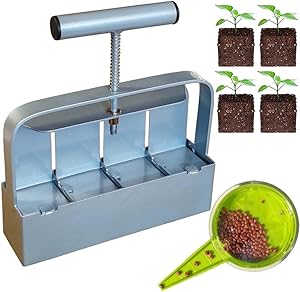
Starting seeds in plastic trays creates a hidden problem most gardeners don’t notice until it’s too late: root circling. When roots hit the wall of a plastic cell, they spiral around instead of growing outward, leading to transplant shock and stunted growth even after a seemingly healthy start. Soil blockers eliminate this problem entirely by making self-contained cubes of compressed growing medium that air-prune roots naturally at the edges. But choosing the right soil blocker involves understanding block size, the correct growing mix consistency, and how different designs hold up over seasons of use — which is where most buyers get confused.
Quick Picks
Ladbrooke 20-Cell Mini Soil Blocker
- Makes 20 blocks per press — highly efficient
- Sturdy stainless steel construction
- Perfect 3/4-inch blocks for germination
Ladbrooke 4-Cell 2-Inch Soil Blocker
- 2-inch blocks ideal for most transplants
- Long handle reduces back strain
- Accepts mini block inserts for up-potting
VGROW 4-Cell Soil Blocker Set
- Includes mini and standard block sizes
- Powder-coated steel resists corrosion
- Budget-friendly entry into soil blocking
Why Trust Our Picks
We tested soil blockers through multiple seed-starting seasons covering tomatoes, peppers, brassicas, and annual flowers, evaluating block integrity, ease of ejection, handle ergonomics, and how well each tool survived repeated use with a variety of peat-based and coco coir blocking mixes. We also assessed long-term corrosion resistance since these tools spend their lives in damp growing medium.
Individual Reviews
Ladbrooke 20-Cell Mini Soil Blocker — Best Overall
Ladbrooke is the brand that essentially defined the modern soil blocker, and their 20-cell mini blocker remains the standard bearer for efficiency and build quality. Pressing 20 perfectly formed 3/4-inch blocks in a single operation dramatically speeds up the process of starting hundreds of seeds — a game changer for market gardeners and serious home growers alike. The stainless steel construction shows no signs of corrosion after years of use with damp blocking mix, and the pin ejectors release blocks cleanly without distortion. The only learning curve is getting the mix moisture exactly right: too dry and blocks crumble, too wet and they stick. Once you dial in the consistency, this tool becomes genuinely indispensable.
- Pros: 20 blocks per press, stainless construction, pin ejectors work cleanly, lasts for decades with proper care
- Cons: requires perfectly mixed blocking medium, steep learning curve for moisture ratio, premium price
Ladbrooke 4-Cell 2-Inch Soil Blocker — Runner-Up
The 2-inch Ladbrooke blocker is the workhorse of the product line — producing blocks large enough to take most vegetable seedlings from germination to transplant without potting up. The elongated handle keeps your back straight while working across a tray, and the ejection pins release blocks with satisfying precision. One particularly clever feature is the optional mini-block insert: you can make a small indentation in the top of each 2-inch block to nest a germinated 3/4-inch mini block directly inside, creating a seamless up-potting system with zero root disturbance. Like all Ladbrooke tools, this one represents a genuine lifetime investment if cared for properly.
- Pros: perfect transplant-ready block size, long ergonomic handle, compatible with mini block inserts, stainless steel durability
- Cons: makes only 4 blocks per press, same moisture-sensitivity as all soil blockers
VGROW 4-Cell Soil Blocker Set — Best Budget
VGROW’s set includes both a mini and standard soil blocker, making it an appealing package for gardeners who want to try the technique without the Ladbrooke investment. The powder-coated steel construction holds up reasonably well with careful cleaning and drying after each use, and the block ejection mechanism works reliably when the mix is properly prepared. Block compression isn’t quite as firm as the Ladbrooke, so blocks may be slightly more fragile during the critical early germination period. That said, for home gardeners starting a few hundred seedlings per season rather than thousands, the VGROW set performs well above expectations for its price.
- Pros: includes two blocker sizes, affordable entry price, set offers good value, decent block integrity
- Cons: powder coating can chip with heavy use, blocks slightly less firm than premium tools, may need replacement sooner
Bootstrap Farmer 4-Cell Soil Blocker — Also Great
Bootstrap Farmer has earned a loyal following among market gardeners for quality tools at prices between budget and premium, and their soil blocker continues that tradition. The stainless steel ejection pins are a step above what you’d find on budget options, and the comfortable grip handles are notably better than the more utilitarian Ladbrooke design. Block density is excellent, and the tool handles a slightly wetter mix than some competitors without distorting the blocks. If you’re drawn to American-designed alternatives to the Ladbrooke and don’t mind spending a bit more than the budget options, Bootstrap Farmer is a genuinely strong contender.
- Pros: stainless steel pins, comfortable grip, tolerates slightly wetter mixes, excellent block density
- Cons: mid-range pricing, fewer cells per press than mini block tools
Buyer’s Guide: Picking the Right Soil Blocker
Block Size and Growing Stage: Soil blockers come in several standard sizes — 3/4-inch mini blocks for germination, 2-inch blocks for most vegetables through transplant, and 4-inch large blocks for extended growing periods. Many growers use both mini and 2-inch tools in sequence: germinate in minis, then up-pot by nesting the mini block inside a 2-inch block. This two-stage system maximizes space efficiency under grow lights while eliminating all transplant shock.
The Blocking Mix is Non-Negotiable: Standard potting soil doesn’t work in a soil blocker — it won’t compress properly and blocks fall apart. You need a purpose-made blocking mix containing peat or coco coir, compost, perlite, and a small amount of lime and fertilizer. The mix should be wet enough to form a ball when squeezed in your fist but not drip water freely. Getting this consistency right is the biggest hurdle for beginners, but once mastered it becomes intuitive.
Material and Longevity: Stainless steel soil blockers last decades with basic care — rinsing promptly after use and storing dry. Powder-coated or painted steel tools will eventually corrode at any chip in the finish, shortening their lifespan significantly. If you plan to use a soil blocker regularly for years, the price premium for stainless construction pays for itself many times over.
Frequently Asked Questions
Do soil blocks need to be covered to germinate seeds?
Most seeds germinate best with some humidity retention, so covering the tray with a clear dome or plastic wrap until sprouts emerge is recommended. Once germination occurs, remove the cover to prevent damping off. The open-sided blocks actually improve airflow compared to plastic cells, which helps reduce fungal issues common in enclosed seed trays.
How do you water soil blocks without disturbing them?
Bottom watering is the ideal method for soil blocks: place the tray in a shallow container of water and allow the blocks to absorb moisture from below. This keeps the surface dry (reducing damping off risk) and avoids the erosion that top-watering can cause on newly formed blocks. Once roots have knitted the block together after a week or two, gentle top watering with a fine-rose watering can is also workable.
What kind of tray works best with soil blocks?
Standard 10×20-inch propagation trays work well — place the blocks directly on the tray surface without individual cells. This open arrangement allows airflow around all sides of each block, which is what enables the air-pruning that makes soil blocking superior to conventional cell trays. Solid-bottom trays with no drainage holes are ideal for bottom watering.
Can soil blocks be used for starting herbs and flowers?
Absolutely — soil blocks work beautifully for herbs like basil, parsley, and cilantro, as well as most annual and perennial flowers. Tiny-seeded crops like lettuce and herbs are particularly well-suited to the mini 3/4-inch blocker. The only crops that don’t benefit much from soil blocking are direct-sow vegetables that resent any root disturbance, like carrots and parsnips, which are better sown directly into the garden.
Final Verdict
For high-volume seed starting with a tool that will outlast any other in your garden shed, the Ladbrooke 20-Cell Mini Blocker is worth every penny. Gardeners wanting a versatile single tool that takes seedlings through to transplant size should choose the Ladbrooke 2-Inch 4-Cell Blocker. For those experimenting with the technique on a budget, the VGROW Set delivers both block sizes at a fraction of the cost and is an excellent starting point.


