
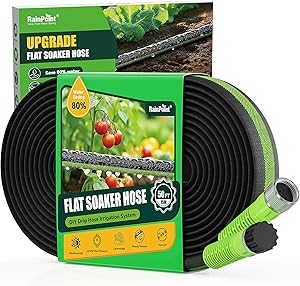
Consistent, deep watering is one of the most important factors in a thriving organic garden — and one of the most time-consuming tasks when done by hand. Drip irrigation systems and soaker hoses deliver water directly to root zones, reduce evaporation, minimize fungal disease by keeping foliage dry, and work beautifully with compost-amended soil that already drains well. Setting up even a basic drip system can save hours of watering per week while producing healthier, more productive plants. We compared the best drip irrigation and soaker hose options on Amazon to find what’s actually worth installing in a home garden.
Quick Picks
Rain Bird Drip Irrigation Watering Kit
- Complete kit covers up to 64 plants with adjustable emitters
- Pressure-compensating emitters deliver consistent flow regardless of line length
- UV-resistant tubing rated for outdoor use across multiple seasons
Melnor Flat Soaker Hose 50 ft
- Flat design hugs soil surface and won’t roll or shift in beds
- Recycled rubber construction is eco-friendly and durable
- Connects to any standard garden hose — no specialized fittings needed
PATHONOR Drip Irrigation Kit 200 Plants
- Covers up to 200 plants with adjustable emitters and stakes
- Includes all connectors, end caps, and hole punch tool
- Easy DIY installation in under an hour for a full raised bed setup
Why Trust Our Picks
We assessed drip irrigation and soaker hose products specifically for raised bed and in-ground organic garden use, focusing on installation ease, long-term emitter reliability, UV resistance, and compatibility with standard hose connections. We prioritized systems that work effectively with the fast-draining, compost-rich soils typical of organic gardens rather than systems designed for clay-heavy landscapes.
Individual Reviews
Rain Bird Drip Irrigation Watering Kit — Best Overall
Rain Bird has supplied professional irrigation systems for decades, and their home garden drip kit brings that engineering expertise to raised bed and vegetable garden use. The kit covers up to 64 individual plants with adjustable emitters that you can set from 0 to 4 gallons per hour — critical for tailoring water delivery to different plant types in mixed beds. Pressure-compensating emitters are the key differentiator: they maintain consistent flow even at the far end of a long supply line, so every plant receives the same amount of water regardless of position. The UV-stabilized polyethylene tubing holds up through multiple seasons without cracking or becoming brittle, and the barbed fittings lock securely without tools. This is the system to install if you want reliable, professional-grade drip irrigation for your organic garden.
- Pros: Pressure-compensating emitters, UV-resistant tubing, covers 64 plants, adjustable flow rates, professional-grade quality
- Cons: More expensive than budget kits, initial setup takes time to plan and install properly
Melnor Flat Soaker Hose — Runner-Up
Soaker hoses take a simpler approach to drip irrigation: water seeps slowly through the entire length of porous hose, moistening the soil evenly along the whole run. The Melnor flat soaker hose is our preferred option because its flat profile lies flush against the soil surface without the rolling and shifting that round soaker hoses are notorious for. Made from recycled rubber, it’s more durable than vinyl alternatives and better for organic gardeners who prefer eco-conscious materials. Connecting to a standard garden hose takes seconds with no specialized fittings. It’s best in rows or rectangular beds where you want uniform moisture across the full length rather than targeted delivery to individual plants.
- Pros: Flat design stays in place, recycled rubber construction, no special fittings needed, even moisture distribution
- Cons: No flow adjustment — waters uniformly along full length, less precise than emitter-based systems
PATHONOR Budget Drip Irrigation Kit — Best Budget
Budget drip kits have improved dramatically in recent years, and the PATHONOR kit covering up to 200 plants represents genuinely good value for first-time drip irrigation installers. Everything you need is in the box: main supply tubing, 1/4-inch distribution tubing, adjustable emitters, stakes, connectors, end caps, and a hole punch tool. Installation is straightforward — punch holes in the main line where you want branches, snap in the barbed fittings, and clip emitters over individual plants. The emitters aren’t pressure-compensating, so plants at the far end of a long line may receive slightly less water, but for a single raised bed or small garden area this rarely matters. It’s an excellent way to experience drip irrigation before committing to a premium system.
- Pros: Very affordable, includes all installation tools and hardware, covers up to 200 plants, easy DIY setup
- Cons: Non-pressure-compensating emitters, tubing less UV-resistant than premium brands, emitter quality varies
Orbit Micro Bubbler Drip System — Also Great
Orbit’s micro bubbler system bridges the gap between point-source drip emitters and full soaker hose coverage. Small bubbler heads distribute water in a 4–6 inch radius around each plant, which is particularly effective for transplants that need moisture distributed over a wider root zone as they establish. This system pairs exceptionally well with freshly compost-amended beds where you want to encourage lateral root development outward from the planting hole. The adjustable flow bubblers work at low pressure and connect to the same 1/4-inch tubing used by most drip systems, making them compatible with existing setups.
- Pros: Wider water distribution than point emitters, great for transplant establishment, compatible with standard drip tubing
- Cons: Bubblers can clog in high-mineral water without a filter, heads can get dislodged by digging or weeding
Buyer’s Guide: Setting Up Drip Irrigation in Your Garden
Drip Emitters vs. Soaker Hose: Point-source emitters deliver targeted water to individual plants — ideal for widely spaced vegetables, fruit, and shrubs. Soaker hoses distribute water evenly along their full length — best for densely planted rows of lettuce, carrots, or herbs. Many gardeners use both: soaker hose in dense vegetable rows and emitters for spaced transplants like tomatoes or squash.
Pressure and Filtration: Drip systems operate at much lower pressure than standard garden hoses — most need a pressure regulator (typically 25–30 PSI) to prevent blowing apart fittings or emitters. A Y-filter or inline filter at the hose connection prevents grit and debris from clogging emitters, which is especially important when using well water or drawing from rain barrels.
Timer Integration: Connecting your drip system to a battery-powered hose timer turns manual irrigation into a fully automated task. A simple timer costs $25–40 and can be programmed to water at specific times and durations — an enormous time saver during the peak growing season when daily watering is essential. This combination of drip system plus timer is one of the best productivity upgrades available to a home vegetable gardener.
Frequently Asked Questions
How long should I run a drip irrigation system each day?
It depends on your emitter flow rate, soil type, and weather. As a general rule, most vegetable gardens need about 1 inch of water per week. With 1 GPH emitters, that translates to roughly 30–60 minutes of daily watering in hot weather. Use a soil moisture meter or the finger test to calibrate for your specific conditions.
Can I connect drip irrigation to a rain barrel?
Yes, with some caveats. Rain barrels have very low water pressure — usually only a few PSI from gravity feed. You’ll need a low-pressure-rated drip system (some are designed for 5–15 PSI) or a small pump to boost pressure. Soaker hoses generally work better than emitter systems at low barrel pressure. Use a fine mesh filter to prevent debris from clogging emitters.
Should I bury drip tubing or leave it on the surface?
Surface installation is easiest and allows you to spot clogs or damage quickly. Covering tubing with a layer of mulch is the best of both approaches: the mulch hides the tubing, prevents UV degradation, and further reduces evaporation. Full burial is an option for permanent installations but makes maintenance and seasonal adjustments much harder.
Do soaker hoses work well in raised beds?
Yes — raised beds with loose, compost-rich soil are ideal for soaker hoses. Water moves laterally through porous, well-structured soil, distributing moisture evenly from the hose outward. Run soaker hose in parallel lines spaced 12–18 inches apart for even coverage across the full bed width. Avoid soaker hoses in heavy clay soil where lateral water movement is poor.
Final Verdict
For the most reliable, configurable drip irrigation system, the Rain Bird kit with pressure-compensating emitters is the clear best choice — it’s what serious organic gardeners install and keep for years. The Melnor flat soaker hose is the best low-tech option for row crops and dense plantings. And if you’re trying drip irrigation for the first time, a budget kit like PATHONOR gives you everything needed to experience the difference before committing to a premium setup.


