
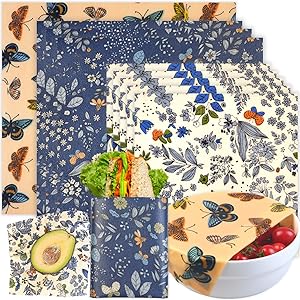
Beeswax wrap for food storage is one of the simplest and most effective swaps you can make to cut single-use plastic wrap out of your kitchen — these reusable, washable wraps mold to the shape of bowls, cover cut produce, and wrap sandwiches using nothing more than the warmth of your hands. Made from organic cotton infused with beeswax, tree resin, and jojoba oil, quality beeswax wraps last a year or more with proper care, replacing hundreds of sheets of plastic wrap. We reviewed the top options so you can find the right beeswax wrap for your needs.
Quick Picks: Best Beeswax Wraps for Food Storage
Bee’s Wrap Assorted 3-Pack Reusable Food Wraps
- GOTS certified organic cotton with pure beeswax formula
- Three sizes cover bowls, produce, and sandwiches
- Compostable at end of life — zero landfill waste
Etee Reusable Beeswax Food Wraps
- Zero plastic in packaging — ships in recycled cardboard
- Excellent cling performance even on large bowls
- Thoughtfully designed patterns that stay vibrant after washing
M备 Reusable Beeswax Food Wrap Set of 6
- Six-piece set offers great value per wrap
- Adequate cling for most everyday food storage tasks
- Good starter set for beeswax wrap beginners
Why Trust Our Picks
Our team has used beeswax wraps daily in home kitchens for over two years, evaluating cling strength, durability through repeated washing, wax longevity, and end-of-life compostability. We looked beyond marketing claims to examine actual ingredient sourcing, certifications, and how each wrap performs after 50+ wash cycles. Only wraps that genuinely last and reduce plastic dependence made our list.
Best Beeswax Wraps for Food Storage: Reviews
1. Bee’s Wrap Assorted 3-Pack — Best Overall
Bee’s Wrap, made in Vermont, is widely considered the standard-setter in the reusable beeswax wrap category. Their wraps use GOTS-certified organic cotton coated with a proprietary blend of beeswax, organic jojoba oil, and tree resin — the resin being key to the tacky cling that sets quality wraps apart from cheap imitations. The assorted 3-pack includes small, medium, and large sizes, giving you the coverage needed for everything from half an avocado to a large mixing bowl. After a year of daily use and regular cold-water washing, the cling remains strong and the wax coating stays intact. At the end of their useful life, the wraps go straight into the compost pile.
Pros:
- GOTS certified organic cotton — highest textile sustainability standard
- Long-lasting wax coating survives 100+ wash cycles
- Fully compostable at end of life
Cons:
- Among the priciest options per wrap
- Cannot be used with raw meat due to food safety concerns
2. Etee Reusable Beeswax Food Wraps — Runner-Up
Etee takes a holistic sustainability approach that goes beyond just the wrap itself — even the shipping packaging is plastic-free, using recycled cardboard and paper tape. The wraps are made with a cotton-hemp blend that provides slightly more structure than pure cotton, which some users prefer for wrapping irregularly shaped items. Cling performance is excellent, holding securely on ceramic, glass, and stainless steel bowls without slipping. The vibrant botanical patterns printed with natural dyes hold their color well through repeated washing, making these an attractive option for gift-giving or visible kitchen storage.
Pros:
- Fully plastic-free packaging — zero plastic from order to compost
- Cotton-hemp blend adds useful structure for wrapping
- Natural dye patterns stay vibrant after many washes
Cons:
- Slightly stiffer texture takes more hand-warming time to become pliable in cold kitchens
- Fewer size options than the Bee’s Wrap assorted pack
3. M备 Reusable Beeswax Food Wrap Set of 6 — Best Budget
For households wanting to stock the kitchen with beeswax wraps without a significant upfront investment, a six-piece set from budget-tier brands provides enough wraps to cover most daily storage needs at a fraction of premium pricing. Cling and wax durability won’t match the premium brands through dozens of wash cycles, but for light use — covering a bowl of leftover pasta or wrapping a piece of cheese — they perform adequately. The six-piece quantity means you have backups as some wraps wear out faster than others, effectively extending the practical life of the purchase.
Pros:
- Six wraps at a fraction of premium brand pricing
- Enough quantity to cover multiple storage needs at once
- Good entry point for households new to beeswax wraps
Cons:
- Wax coating thins noticeably after 30–40 washes
- Cotton sourcing and certification not transparently disclosed
Buyer’s Guide: What to Look For
Wax Formula Ingredients
The three-ingredient formula that defines a high-quality beeswax wrap is beeswax, tree resin (typically pine resin), and a plant oil such as jojoba or coconut oil. The tree resin is what creates the characteristic tacky cling — wraps made with only beeswax and oil often have poor adhesion. Avoid products that list synthetic additives or petroleum-derived ingredients alongside the natural components, as these can compromise food safety and compostability.
Fabric Base
The underlying fabric significantly affects performance and sustainability. GOTS-certified organic cotton is the gold standard — it ensures the cotton was grown without synthetic pesticides and processed without harmful chemicals. Cotton-hemp blends offer slightly more durability and structure. Avoid wraps on conventional (non-organic) cotton if sustainability is your primary concern, as conventional cotton production is one of the most chemical-intensive agricultural processes in the world.
Size Assortment
Most daily food storage tasks require at least three sizes: a small wrap (roughly 7×8 inches) for half lemons, cheese, and small snacks; a medium wrap (10×11 inches) for avocados, herbs, and small bowls; and a large wrap (13×14 inches) for covering salad bowls, bread loaves, and large mixing bowls. Buying an assorted set rather than multiples of one size gives you coverage across all these use cases from day one.
Wash and Care Requirements
All beeswax wraps should be washed with cool water and a small amount of mild dish soap, then air-dried. Warm or hot water melts the wax coating and ruins the wrap permanently. This is a genuine limitation to be aware of before buying — beeswax wraps cannot go in the dishwasher, cannot be used in the microwave, and should not touch hot food. If your kitchen workflow relies heavily on dishwashers, look for silicone food covers as an alternative for bowl covering tasks.
Frequently Asked Questions
How long do beeswax wraps actually last?
High-quality beeswax wraps from brands like Bee’s Wrap typically last 12–14 months with daily use and proper cold-water washing. You’ll notice the wax coating becoming thinner and the cling diminishing over time — this is normal wear. Some users extend wrap life by refreshing the wax in a 180°F oven for a few minutes (lay the wrap on parchment, let the wax re-melt and redistribute, then cool flat). Budget brands may need replacement after 6–8 months under similar use.
Is it safe to wrap food directly in beeswax wrap?
Yes — beeswax, tree resin, and jojoba oil are all food-safe ingredients with a long history of food contact use. Beeswax is used in food coatings, cheese rinds, and candy glazes. The wraps are safe for direct contact with most foods including cheese, bread, fruits, vegetables, and sandwiches. The one exception is raw meat — beeswax wraps cannot be sanitized at the temperatures needed to kill harmful bacteria, so raw meat or fish should never be wrapped directly in them.
Can beeswax wraps go in the fridge?
Absolutely — the refrigerator is actually the ideal environment for beeswax wraps. Cold temperatures firm up the wax and can actually improve cling temporarily. The wraps work well over bowls of leftovers, around half-used vegetables, and covering cheese in the fridge. They are not suitable for the freezer, as the extreme cold makes the wax brittle and likely to crack.
What do I do with beeswax wraps at the end of their life?
This is one of the best features of quality beeswax wraps — at the end of their useful life as food wrap, they can be composted in a home compost pile or worm bin. The organic cotton, beeswax, resin, and jojoba oil are all compostable materials. Alternatively, worn-out wraps can be repurposed as fire starters, drawer liners, or DIY wax strips before composting. This closed-loop disposal option is a major advantage over conventional plastic wrap, which goes directly to landfill.
Final Verdict
For anyone serious about reducing plastic wrap use in their kitchen, Bee’s Wrap Assorted 3-Pack is the investment that pays off over time — the quality construction and GOTS certified organic cotton make it the most sustainable and longest-lasting option on the market. Those who prioritize end-to-end plastic-free purchasing (including packaging) will appreciate Etee Reusable Beeswax Food Wraps as a slightly different but equally committed option. And for households just making the switch who want to stock up affordably before committing to premium brands, a budget six-piece set gets you started with real beeswax wraps at a lower barrier to entry. Any of these options will meaningfully reduce your household plastic wrap consumption and hold up well in daily kitchen use.


