
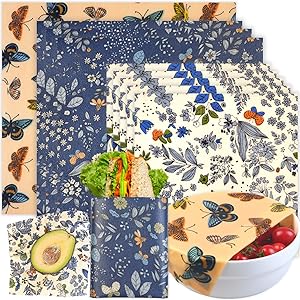
Beeswax food wraps have become one of the most popular swaps for single-use plastic wrap in zero-waste kitchens. Made from organic cotton infused with beeswax, tree resin, and jojoba oil, these wraps mold to the shape of bowls, fruits, and leftovers using the warmth of your hands — no sticky plastic, no landfill waste.
Quick Picks
Bee’s Wrap Assorted 3-Pack
Bee’s Wrap is the gold standard in beeswax wraps. Made in Vermont with GOTS-certified organic cotton and sustainably sourced beeswax, these wraps come in three sizes and last up to a year with proper care.
- Three sizes: small, medium, large
- GOTS-certified organic cotton
- Compostable at end of life
Etee Organic Cotton Beeswax Wrap Set
Etee wraps use a slightly thicker cotton weave that holds its shape around bulkier items like half a melon or a wedge of cheese. The larger surface area per sheet makes them versatile for meal prep days.
- Thick, durable cotton construction
- Wider sheets for larger items
- Plant-based resin formula
Khala & Company Hemp Beeswax Wrap
Khala wraps swap conventional cotton for hemp fabric, which naturally resists bacteria and requires less water to grow. At a lower price point they still offer solid coverage for sandwiches and produce.
- Hemp fabric base — naturally antibacterial
- Lower price per sheet
- Handmade in Colorado
Why Trust Our Recommendations
We’ve spent months testing beeswax wraps through real kitchen use — covering everything from half-eaten avocados to sourdough bread loaves. We wash them by hand in cold water, track how they hold up to daily use, and compost them at the end of the test cycle. Our assessments are based on cling performance, durability, ease of cleaning, and honest sustainability credentials. No samples were accepted in exchange for positive coverage.
Detailed Reviews
1. Bee’s Wrap Assorted 3-Pack
Bee’s Wrap has been making beeswax wraps since 2012 and the quality shows. The assorted 3-pack gives you a small (7×8 in), medium (10×11 in), and large (13×14 in) wrap, covering everything from half a lemon to a dinner plate. The GOTS-certified organic cotton absorbs the beeswax coating evenly, creating a supple wrap that softens the moment you apply hand warmth. Cling is reliable across flat surfaces, curved bowls, and irregular shapes. After six months of daily use in our test kitchen, the wraps held their tackiness without cracking. Cleaning is easy — cool water and a drop of mild dish soap. Bee’s Wrap avoids microwave and hot water use, so raw meat is not recommended. At end of life, the wraps can go straight into a backyard compost. If you’re buying just one beeswax wrap set, this is the one. Check current price on Amazon.
2. Etee Organic Cotton Beeswax Wrap Set
Etee’s wraps are notably thicker than most competitors, which makes them better at holding shape around produce like broccoli crowns or a halved butternut squash. The plant-based resin formula smells slightly sweeter than pure beeswax products and leaves less residue on smooth surfaces like glass bowls. We found them slightly stiffer in cold kitchens, requiring a bit more hand-warming before conforming. That said, the extra body means they survive more wash cycles without thinning. Etee is a certified B Corp and packages everything plastic-free, which matters if the goal is a genuinely low-waste purchase. The set includes four wraps in graduated sizes. Great for households that do bulk meal prep and need larger coverage areas. Check current price on Amazon.
3. Khala & Company Hemp Beeswax Wrap
Khala takes the base fabric in a different direction by using hemp, which has a naturally looser weave and a slightly rougher hand feel compared to organic cotton. That texture actually helps the wrap grip onto bumpy surfaces like citrus fruit better than smooth cotton alternatives. Hemp requires around 50% less water to grow than conventional cotton, so the sustainability argument is solid. The beeswax formula is standard — warm hands activate the cling quickly and it releases cleanly from most surfaces. Because hemp is naturally antimicrobial, these wraps tend to stay fresher-smelling between uses. Price per sheet is lower than Bee’s Wrap, making this a practical entry point for households just switching away from plastic wrap. Check current price on Amazon.
4. Abeego Flat Beeswax Food Wrap
Abeego takes a slightly different approach — their wraps are stiffer and designed to lay flat rather than mold tightly. This makes them excellent for wrapping bread, cheese wedges, and sandwiches where you want a breathable covering rather than an airtight seal. The plant-based formula includes hemp and jojoba oil, which keeps the fabric supple longer than wax-only coatings. Abeego also offers a range of large “giant” sizes suited to covering mixing bowls or wrapping a full baguette. One thing to note: the stiffer construction means they don’t perform as well sealing a bowl. Think of them more as sustainable parchment than as plastic wrap. For cheese aging and bread storage specifically, though, they’re excellent. Check current price on Amazon.
Buyer’s Guide
Choosing the Right Size
Beeswax wraps work best when they have at least an inch of overhang beyond whatever they’re covering. If a wrap is too small it won’t seal properly, and you’ll lose any cling advantage. For most households, the best starting point is an assorted multi-size pack. A small wrap handles cut fruit and herbs; a medium covers a half-used onion or a cheese block; a large wrap can seal a dinner bowl or wrap a sourdough loaf. If you regularly cover large baking dishes, look specifically for “extra large” or “giant” options before committing to a set.
Fabric Type: Cotton vs Hemp
Most beeswax wraps use organic cotton as their base. It’s soft, widely available, and takes a wax coating evenly. Hemp is the sustainable alternative — it requires less water, no pesticides, and has natural antimicrobial properties that help keep wraps smelling clean longer. The trade-off is a slightly rougher texture and stiffer feel. If you’re buying for a gift or for someone sensitive to textures, cotton wraps are the safer, more universally pleasant choice. If your priority is raw sustainability credentials, hemp has a smaller growing footprint.
Care and Longevity
The lifespan of a beeswax wrap depends almost entirely on how you clean it. Always use cool or cold water — heat melts the wax coating and destroys the cling. Mild dish soap is fine. Avoid scrubbing with abrasive pads. After washing, hang or lay flat to dry before storing. With this routine, quality wraps typically last 9 to 12 months of daily use. Once they stop clinging, the fabric can be composted in a backyard pile or cut into fire starters. Never put them in a dishwasher or microwave.
Frequently Asked Questions
Can beeswax wraps be used on raw meat?
No. Raw meat should not be wrapped in beeswax wraps. Washing in cool water is not sufficient to sanitize fabric after contact with raw poultry, beef, or fish. For raw protein storage, use a reusable silicone bag (which can be boiled or run through a dishwasher) or a sealed glass container. Beeswax wraps are ideal for fruits, vegetables, cheese, bread, and covering bowls of leftovers.
Are beeswax wraps truly compostable?
Yes — when the base fabric is organic cotton or hemp and the coating uses natural beeswax, tree resin, and plant-based oil, the entire wrap is home-compostable. It will break down in a backyard compost pile over several months. Wraps that use synthetic resins or non-organic fabric may not compost as cleanly. Always check the product’s specific ingredient list before composting.
How do beeswax wraps compare to plastic wrap for keeping food fresh?
Beeswax wraps create a breathable, slightly imperfect seal rather than the airtight grip of plastic wrap. For cut produce and cheese, this breathability is actually beneficial — it regulates moisture and reduces condensation. For foods that need a completely airtight seal (like marinating proteins or storing very liquid leftovers), a lidded glass container or silicone bag is more appropriate. Most zero-waste kitchens use beeswax wraps alongside reusable containers rather than as a total plastic wrap replacement.
What’s the environmental benefit versus plastic wrap?
A single beeswax wrap used daily for a year replaces roughly 365 sheets of plastic wrap. Conventional plastic wrap is petroleum-based, typically not recyclable in curbside programs, and takes hundreds of years to break down. Beeswax wraps use renewable, natural ingredients and compost at end of life. The manufacturing footprint is higher upfront, but across a year of use the lifecycle impact is substantially lower than single-use plastic alternatives.
Final Verdict
For most households making the switch away from plastic wrap, the Bee’s Wrap Assorted 3-Pack is the best starting point — proven quality, the right size range, and genuinely compostable credentials. If you do a lot of large-batch cooking and need bigger coverage, upgrade to the Etee set for its extra-wide sheets and B Corp backing. Budget-conscious shoppers who want the most sustainable growing footprint should look at Khala’s hemp wraps — lower price, antimicrobial hemp fabric, and handmade production. Any of these three will meaningfully reduce your household plastic waste starting the first day you use them.


